


Window film vs blinds
Window film keeps your view, reduces heat and glare and lasts longer than blinds. Discover the cost, maintenance and long term benefits of window film for your home.
31 August 2026
Share this article



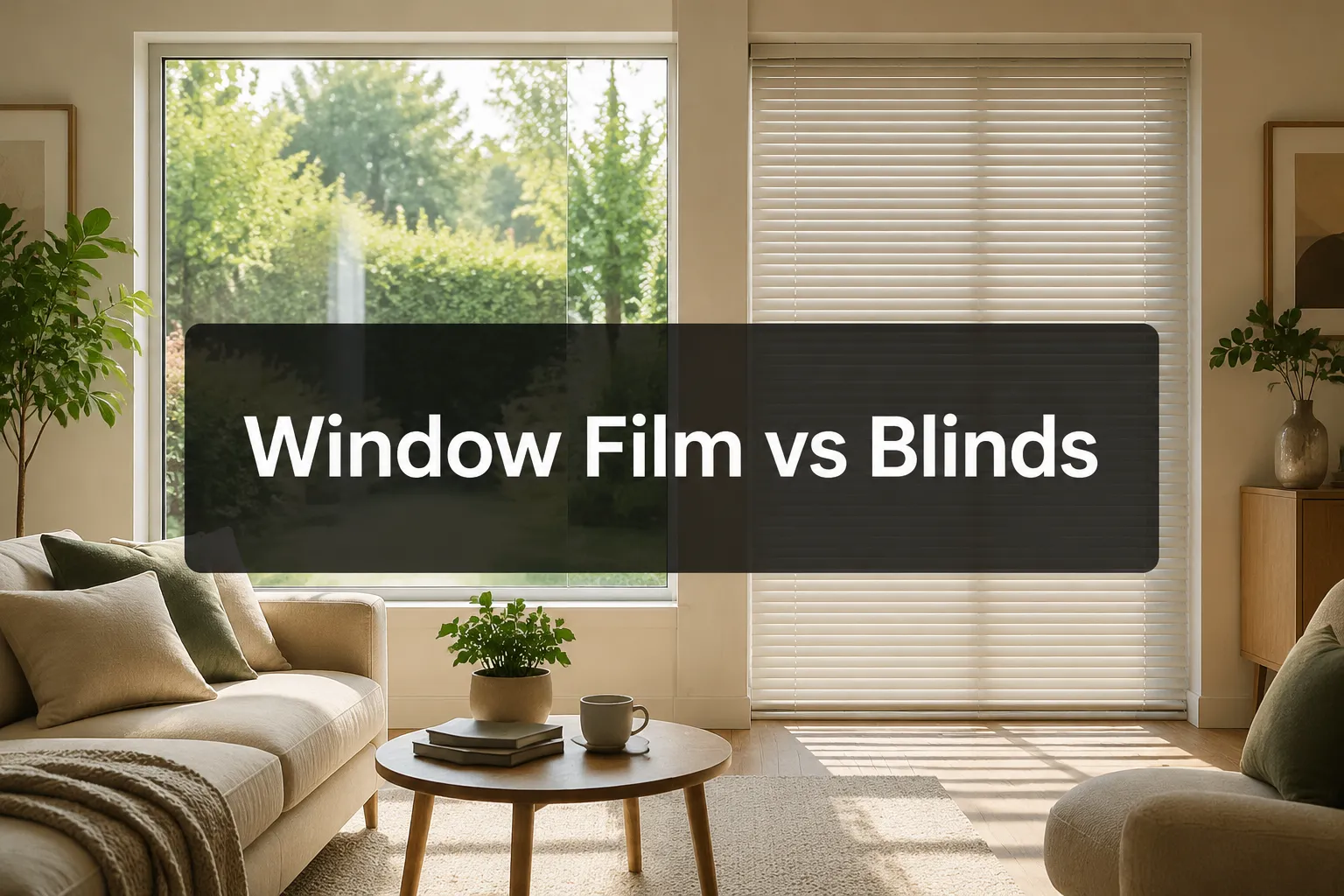
Quick Answer: Window film outperforms blinds on almost every practical measure for homeowners, conservatory owners and businesses who want lasting comfort without giving up their view. Professionally installed window film requires minimal maintenance, does not break or wear out in the way blinds do. Window film delivers multiple benefits including heat reduction, UV protection and privacy from a single solution. For most properties across West Sussex and Hampshire, window film represents a stronger long term investment than blinds.
Key Takeaways
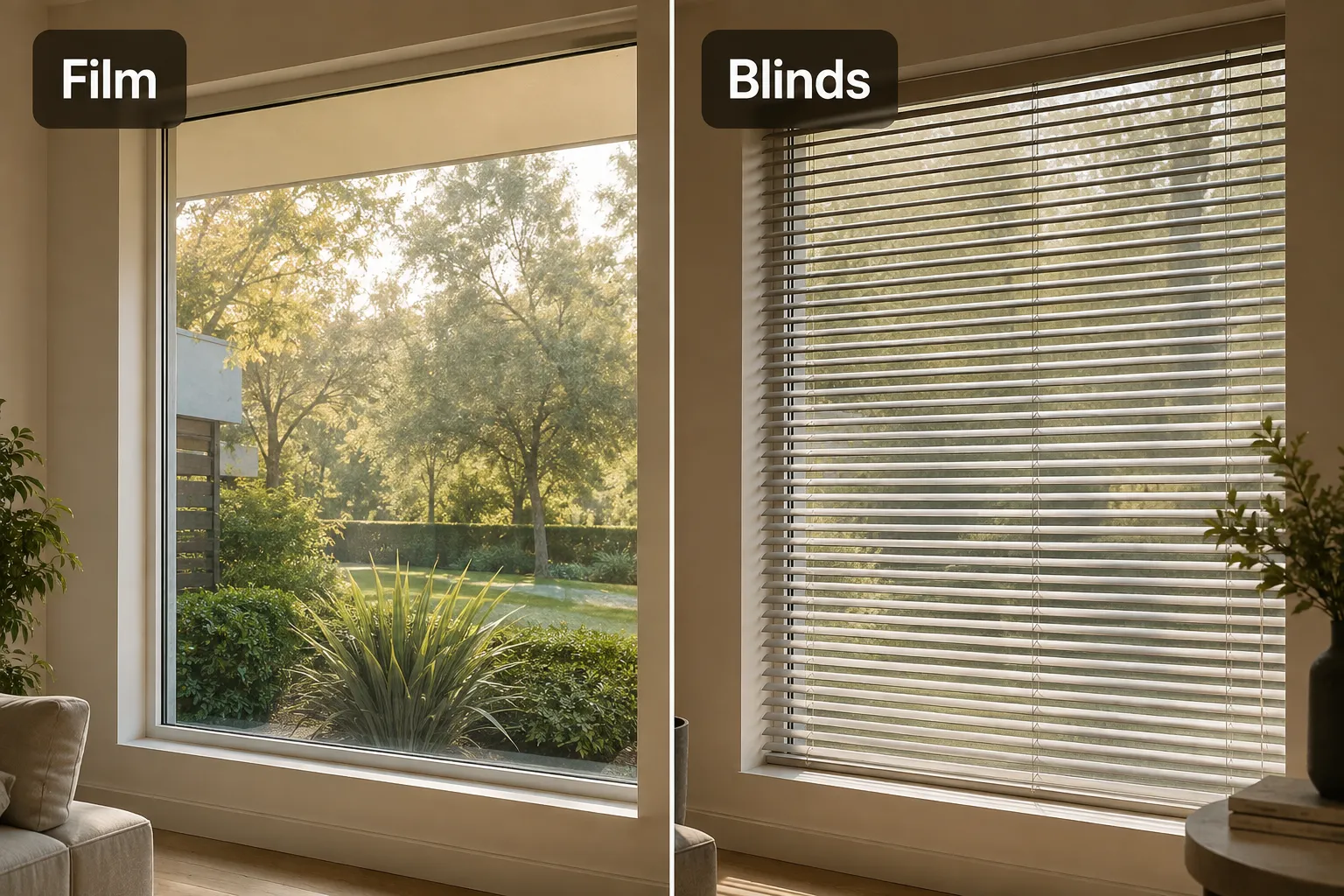
Window film keeps your view intact while reducing heat and glare; blinds block the view to achieve the same result
Professionally installed window film typically lasts ten to fifteen years with very little maintenance required
Cleaning window film requires only tissue and plain water or window cleaner, making it far simpler than cleaning blinds
Window film does not break, warp, tangle or lose slats the way blinds do over time
Solar control window film provides UV protection, heat reduction and privacy from a single installation
The long term cost of window film is generally lower than replacing blinds multiple times over the same period
Window film works in all weather conditions including high summer heat and low winter sun
Blinds may suit those who want complete blackout or a specific decorative style, but they cannot match the functional range of window film
How Much Does Window Film Cost Compared to Blinds?
Window film typically costs more upfront than a basic set of blinds, but the comparison changes significantly when you account for the full lifespan of each solution. Blinds need replacing more often, require more maintenance and offer fewer functional benefits per pound spent.
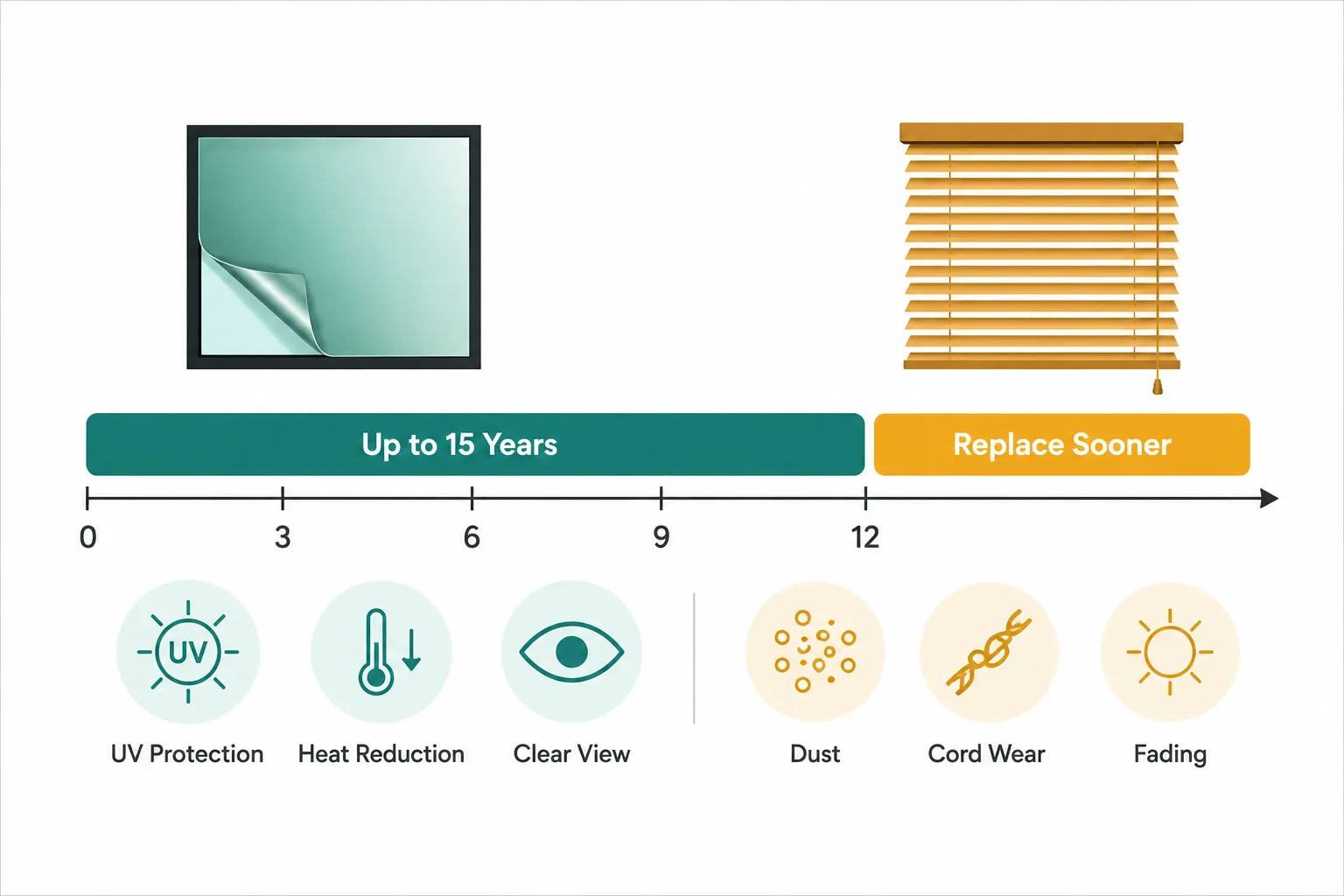
A professionally installed window film for a conservatory or home room is a one-time investment that continues to perform for a decade or more. Blinds, by contrast, fade, warp, tangle and eventually need replacing, often within three to seven years depending on the quality and how much sun exposure they receive.
When you factor in replacement costs, cleaning time and the additional products you may need to manage heat or glare separately, window film becomes the more cost-effective choice over a realistic ownership period. For a fuller picture of what window film delivers for the money, the window film benefits page at TwilightTint is a useful starting point.
Choose window film if: you want a single solution that manages heat, glare, fading reduction and UV protection without ongoing replacement costs.
Choose blinds if: your primary goal is complete blackout or a specific decorative finish and long term running costs are a secondary concern.
What Is the Maintenance Like for Window Film vs Blinds?
Window film requires very little maintenance. Blinds require noticeably more.
Professionally installed window film sits flush against the glass and has no moving parts, no cords, no slats and no fabric to attract dust. Cleaning is straightforward. Blinds, particularly horizontal slatted designs, collect dust on every surface and need regular attention to stay looking clean.
Window film maintenance in practice:
Wipe with a soft brand new tissue and plain water or window cleaner
Avoid microfiber cloths or solvent-based cleaners
No specialist products needed
No mechanical parts to check or replace
Blind maintenance in practice:
Dust each slat individually or remove and wash fabric blinds
Check and replace cords, chains or mechanisms over time
Fabric blinds can absorb odours and stain
Motorised blinds require occasional servicing
For busy households and commercial spaces across Chichester, Portsmouth and Worthing, the reduced maintenance demand of window film is a practical advantage that adds up over years of daily use.

How Do You Clean Window Film Without Damaging It?
Cleaning window film is simple and requires no specialist products. Use a soft, lint-free tissue dampened with plain water or window cleaner and wipe the surface gently. For any stubborn marks, a small amount of mild washing-up liquid diluted in water is sufficient. We will provide you with cleaning instructions after the window film installation is carried out.
What to avoid:
Abrasive sponges, microfiber cloths or scouring pads
Ammonia-based glass cleaners (these can degrade the film over time)
Razor blades or sharp tools near the edges
High-pressure water sprays directed at the film edges
The film surface is durable under normal cleaning. It is worth waiting at least thirty days after a new installation before cleaning, as this allows the adhesive to cure fully. After that, regular gentle cleaning keeps the film looking clear and performing well.
For more guidance on caring for your installation, the team at TwilightTint is always happy to advise directly.
How Long Does Window Film Last Before Needing Replacement?
Professionally installed solar control window film typically lasts between ten and fifteen years and in some cases longer, depending on the film type, the direction the window faces and how well it is maintained. This is considerably longer than most blind products under the same conditions.
South-facing windows in West Sussex and Hampshire receive significant sun exposure across spring and summer. Quality window film is designed to handle this without peeling, bubbling or discolouring. Lower-quality self-adhesive films purchased without professional installation tend to perform less well and may need replacing sooner.
The longevity of professionally installed window film is one of the clearest reasons it represents a strong long term investment. A conservatory owner in Bognor Regis or a homeowner in Petersfield who installs quality window film today can reasonably expect it to still be performing well a decade from now. You can explore the range of films available through TwilightTint's window films page.
Does Window Film Scratch or Break Easily?
Window film does not break in the way blinds do. It has no mechanical components, no moving parts and nothing that can snap, tangle or fall off. This is one of the most practical advantages it holds over blinds in everyday use.
The window film surface which has a scratch resistant coating can be scratched if treated roughly, which is why soft tissue are recommended for cleaning. However, under normal use in a home, conservatory or office, professionally installed window film holds up very well. It does not warp in heat, does not fade as quickly as fabric blinds and does not suffer from the cord and mechanism failures that affect roller and venetian blinds over time.
For families with young children or pets, the absence of cords and dangling mechanisms is also a meaningful safety benefit. Blind cords have been associated with safety concerns for young children and window film removes that risk entirely.
Can You See Through Window Film from Outside?
This depends on the type of window film chosen and it is one of the most common questions people ask when comparing window film to blinds. Solar control window film is designed to reduce heat and glare while keeping the view intact from the inside. Privacy window film can be chosen specifically to limit visibility from outside while still allowing natural light in.
Unlike blinds, which either block the view entirely or allow it fully depending on how they are positioned, window film gives a consistent result throughout the day without any adjustment needed. You keep your view of the garden or street. Visitors from outside see a reflective or frosted surface depending on the film type selected.
This is one of the multiple benefits of window film that blinds simply cannot replicate. For office environments where privacy in meeting rooms matters, frosted window film solutions offer an elegant answer without sacrificing natural light.

Is Window Film Worth It as a Long Term Investment?
For most homeowners, conservatory owners and businesses, professionally installed window film is a sound long term investment. It delivers multiple benefits from a single installation, requires minimal upkeep and does not need replacing as frequently as blinds.
The value becomes particularly clear in conservatories. A conservatory that is too hot to use in summer represents a significant wasted investment in the property. Solar control window film makes the space genuinely comfortable and usable year-round without building work or structural changes. Customers across West Sussex and Hampshire regularly describe their conservatory as transformed after installation. You can see real results in the conservatory window tinting gallery.
Window film delivers long term value through:
Reduced need for replacement compared to blinds
Protection of furniture and flooring from UV fading
Lower demand on cooling or ventilation in summer
Consistent performance without adjustment or maintenance
A cleaner, more considered aesthetic that does not date
For a deeper look at how window film compares across different settings, the article on blinds versus window film covers the topic in further detail.
What Are the Main Benefits of Window Film Over Blinds?
Window film provides multiple benefits that blinds cannot match from a single product. Blinds address light and privacy by physically blocking the window. Window film addresses heat, glare, UV protection and privacy while keeping the view open.
The core benefits of professionally installed window film:
Helps reduce heat entering through the glass, making rooms more comfortable in summer
Helps reduce glare without closing off natural light or the view outside
UV protection that helps prevent fading of furniture, flooring and soft furnishings
Privacy without blocking daylight, depending on the film type chosen
No moving parts that wear out, break or require servicing
Consistent performance throughout the day without manual adjustment
Blinds do one thing: they block the window. Window film does several things simultaneously and does them without interrupting your enjoyment of the space. For homeowners in Chichester or Havant with rooms that face south or west, this combination of benefits in a single solution is genuinely useful.
Does Window Film Work for Privacy and Heat Control?
Yes. Solar control window film and privacy window film can be selected to address both needs, either separately or in combination. This is one of the clearest advantages window film holds over blinds for residential and commercial use.
A solar control window film reduces the amount of heat and glare passing through the glass while keeping the view intact. A privacy film limits visibility from outside while still allowing natural light to enter. In many cases, a single film type can address both heat and privacy together, depending on the specification chosen.
For static caravan owners across the region, this combination is particularly valuable. Static caravans heat up quickly in direct sun and often sit in close proximity to neighbouring pitches. Static caravan window film addresses both the heat and the privacy concern in one installation, without the need for blinds that take up interior space and require regular cleaning.
Can You Remove Window Film Without Leaving Residue?
Professionally installed window film can be removed, though it is worth noting that removal is a task best handled by an experienced installer. When removed, window film leaves minimal residue on the glass. Any adhesive that does remain can be cleaned away with the appropriate solvent without damaging the glass itself.
Self-adhesive films purchased and applied without professional installation are more likely to leave residue on removal, particularly if they have been in place for many years or have been exposed to significant heat. This is one of the practical reasons that professional installation from a specialist like TwilightTint produces a better long term result than a DIY approach.
If circumstances change and removal is needed, it is always worth contacting the original installer first. TwilightTint has been handling window film installation across West Sussex and Hampshire for over 20 years and can advise on removal as well as replacement options.
What Happens to Window Film in Extreme Weather?
Quality professionally installed window film is designed to perform across a wide range of weather conditions. It handles high summer temperatures, low winter sun and coastal weather without peeling, bubbling or discolouring under normal circumstances.
South-facing homes and conservatories in West Sussex and Hampshire experience some of the highest solar gain in England during summer. Window film installed to a professional standard is specified to handle this. The adhesive bond between the film and the glass is designed to remain stable across temperature fluctuations.
Blinds, by contrast, can warp in sustained heat, particularly plastic or wood venetian blinds near south-facing glass. Fabric blinds can fade and become brittle over time. Window film ages more gracefully under the same conditions, which is part of why it represents a more reliable long term investment for properties in this region.
Are There Any Downsides to Window Film?
Window film is not the right answer for every situation, and it is worth being honest about where blinds remain a better choice.
Situations where blinds may be more suitable:
Complete blackout is needed, such as in a bedroom where total darkness matters for sleep
A strong decorative statement is the primary goal and function is secondary
The budget for professional installation is not available at this time
Situations where window film is clearly the better choice:
You want to keep the view and manage heat and glare simultaneously
You want a low-maintenance solution that does not need regular cleaning or replacement
You need UV protection for furniture and flooring
You want privacy without blocking natural light
You are looking for a long term investment rather than a short term fix
For most homeowners, conservatory owners and businesses across West Sussex and Hampshire, the balance of practical benefits falls firmly in favour of professionally installed window film. The home window tinting service page gives a clear overview of what residential installation involves.
Who Should Use Window Film Instead of Blinds?
Window film is the better choice for anyone who wants lasting comfort, a clear view and minimal ongoing effort. Blinds suit those whose primary need is complete light blockout or a specific decorative look.
Window film is well suited to:
Homeowners with south or west-facing rooms that overheat in summer
Conservatory owners who want to use the space year-round
Static caravan owners who want cooler, more private interiors
Office and commercial managers dealing with screen glare and staff discomfort
Anyone who values their view and does not want to cover it up
TwilightTint has been helping customers across Chichester, Worthing, Portsmouth, Petersfield and the wider West Sussex and Hampshire area find the right window film solution for over 20 years. Rated 4.7 stars on Google, the business focuses exclusively on window film installation, which means every recommendation is based on genuine specialist knowledge rather than a sales agenda.
Frequently Asked Questions
Is window film cheaper than blinds in the long run?
For most properties, yes. Professionally installed window film lasts ten to fifteen years with minimal maintenance. Blinds typically need replacing within three to seven years and require more regular cleaning. Over a ten-year period, window film is generally the more cost-effective solution.
Does window film block the view like blinds do?
No. Solar control window film reduces heat and glare while keeping the view through the glass intact. This is one of the key advantages it holds over blinds, which must be closed to be effective.
How long does window film take to install?
Most residential installations are completed within a day or two. A conservatory or larger commercial space may take few days. There is no building work involved and the space is usable again the same day.
Will window film make my room too dark?
Professionally installed solar control window film is selected to reduce glare and heat without significantly reducing the amount of natural light in the room. The result is softer, more comfortable light rather than a darker space.
Can window film be applied to double glazing?
Yes, in most cases. The suitability depends on the specific glass type and the age of the unit. A specialist installer will assess the glass before recommending a film to ensure compatibility.
Does window film work in winter as well as summer?
Yes. In winter, certain window films help retain warmth inside the room. In summer, solar control window film helps reduce heat gain. The film works year-round, which is part of what makes it a strong long term investment.
Is window film permanent?
No. Professionally installed window film can be removed if needed. When removed carefully by an experienced installer, it leaves no glue residue on the glass.
Does window film require any special products to clean?
No. A soft tissue and plain water or window cleaner are all that is needed for routine cleaning. Avoid ammonia-based cleaners and abrasive materials.
What is the difference between solar control film and privacy film?
Solar control window film is designed primarily to reduce heat and glare while keeping the view open. Privacy window film limits visibility from outside while still allowing natural light in. Some films address both needs simultaneously.
Can window film replace blinds entirely?
For most applications, yes. Window film handles heat, glare, UV protection and privacy without covering the window. Blinds remain the better choice only where complete blackout is the primary requirement.
Conclusion
The comparison between window film and blinds comes down to what you want from your windows. Blinds cover the problem. Window film addresses it.
Professionally installed solar control window film keeps your view, helps reduce heat and glare, provides UV protection and requires very little maintenance over a lifespan that typically stretches to fifteen years or more. It does not break, tangle or wear out in the way blinds do. For homeowners, conservatory owners, static caravan owners and businesses across West Sussex and Hampshire, it is a considered long term investment that continues to deliver multiple benefits every day.
Blinds have their place, particularly where complete blackout is the goal. But for anyone who wants their space to feel more comfortable without giving up the view or committing to regular cleaning and replacement, window film is the more practical and more rewarding choice.
TwilightTint has been installing window film across West Sussex and Hampshire for over 20 years. Rated 4.9 overall including Google, Facebook, our own website and focused exclusively on window film installation, the team brings genuine specialist knowledge to every project, from a single conservatory window to a full commercial fit-out.
Request your quote at twilighttint.co.uk.
Table of content
- Key Takeaways
- How Much Does Window Film Cost Compared to Blinds?
- What Is the Maintenance Like for Window Film vs Blinds?
- How Do You Clean Window Film Without Damaging It?
- How Long Does Window Film Last Before Needing Replacement?
- Does Window Film Scratch or Break Easily?
- Can You See Through Window Film from Outside?
- Is Window Film Worth It as a Long Term Investment?
- What Are the Main Benefits of Window Film Over Blinds?
- Does Window Film Work for Privacy and Heat Control?
- Can You Remove Window Film Without Leaving Residue?
- What Happens to Window Film in Extreme Weather?
- Are There Any Downsides to Window Film?
- Who Should Use Window Film Instead of Blinds?
- Frequently Asked Questions
- Conclusion


Join us on our journey as we transform your glazing and help you achieve its full potential.
Feel free to get in touch with us via our chat widget
@ TwilightTint Ltd 2026. All right reserved.
X


Youtube
