


Climate Adaptation Window Film: Home Comfort Guide 2026
Discover how climate adaptation window film helps reduce heat, glare and UV fading in homes, conservatories and caravans across West Sussex and Hampshire. Expert guidance from TwilightTint.
Share this article




Quick Answer
Climate adaptation window film is a professionally installed solar control film applied directly to existing glass surfaces to reduce heat build-up, manage glare and protect interiors from UV damage. It requires no structural changes to a property and works in homes, conservatories, static caravans and commercial premises. For homeowners across West Sussex and Hampshire, it is one of the most practical and low-disruption responses to increasingly warm British summers.
Key Takeaways
Climate adaptation window film helps reduce solar heat entering through glass, making rooms more comfortable during brighter and warmer months without building work or major disruption
Professionally installed window film also helps reduce glare, slows UV fading of furniture and flooring and can contribute to lower energy use over time
Window film works on older homes and newer properties alike and is not limited to new construction
The cost of professionally installed window film is generally far lower than air conditioning installation and ongoing running costs
Window film and solar screens serve different purposes; window film is applied directly to glass and offers a cleaner, more permanent result for most homes
Renters can use removable window film options, though professional installation on fixed film is typically arranged by the property owner
Common installation mistakes include poor surface preparation and incorrect film selection, both of which are avoided by using a specialist installer
For homes across Chichester, Worthing, Portsmouth and surrounding areas, solar control window film addresses a real and growing seasonal comfort problem
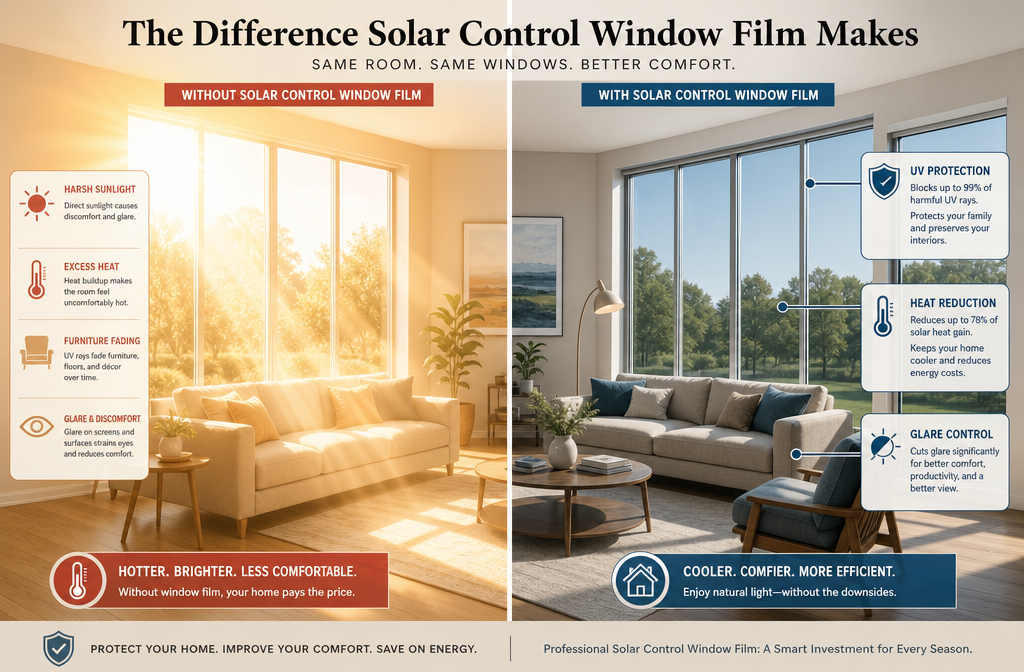
What Exactly Is Climate Adaptation Window Film?
Climate adaptation window film is a thin, multi-layer film applied to the interior surface of existing glass to manage how solar energy enters a building. It works by reflecting and absorbing a portion of incoming solar radiation before it can heat the room or cause glare.
The term "climate adaptation" refers to practical measures people take to remain comfortable as weather patterns shift. In the UK, summers are becoming warmer and more prolonged and south-facing homes in counties like West Sussex and Hampshire feel this more acutely than most. Solar control window film is one of the most accessible and cost-effective responses available to homeowners today.
Unlike reflective coatings on modern double glazing, window film can be retrofitted to any existing glass surface. It does not require new windows, planning permission or structural alterations. You can explore the full range of window film options at TwilightTint to understand what is available for different property types.
How Much Cooler Does Window Film Make a House?
Window film makes a measurable difference to interior comfort, though the precise temperature reduction varies depending on the film specification, the orientation of the glass and the size of the glazed area.
South and west-facing rooms with large windows tend to show the most noticeable improvement. Rooms that previously became uncomfortably warm by mid-afternoon often remain usable throughout the day after window film installation. The change is not just about temperature; reduced glare also makes rooms feel calmer and easier to spend time in.
It is worth being honest here: window film is not an air conditioning system. It does not actively cool a room. What it does is reduce the amount of solar heat entering through the glass in the first place, which means rooms warm up more slowly and stay more comfortable for longer. For many homes, that is exactly what is needed.
Cost Comparison: Window Film Versus Air Conditioning
For most homes, professionally installed window film costs significantly less than air conditioning, both to install and to run. Air conditioning units require electrical infrastructure, ongoing energy consumption and regular maintenance. Window film, once installed, requires no energy to function and very little maintenance over its lifespan.
A rough comparison for a typical home:
SolutionTypical Installation CostOngoing Running CostDisruption LevelSolar control window filmLower one-off costNoneMinimal, hours not daysSplit-system air conditioningHigher installation costOngoing electricity useSignificant, requires electrical workPortable air conditioning unitLower upfront costOngoing electricity useNone to install, but noisy and less effectiveExternal solar blindsModerate costNoneLow, but affects exterior appearance
Window film also addresses UV fading and glare, which air conditioning does not. For homeowners who want a calmer, more comfortable home without a significant ongoing energy cost, solar control window film is a practical and proportionate response.
Best Window Films for Hot Climates and Warm British Summers
The best climate adaptation window film for a given property depends on the orientation of the glazing, the level of privacy required and whether glare or heat is the primary concern.
For south and west-facing rooms, a higher solar rejection film will deliver the most noticeable comfort improvement. For conservatories, a film that balances heat reduction with light transmission is important, since the goal is to make the space usable rather than to darken it. You can see how this works in practice by browsing the conservatory window tinting gallery at TwilightTint.
For static caravans, where large windows and lightweight construction make heat build-up a particular challenge, a solar control film with good UV protection is especially valuable. The static caravan window tinting service at TwilightTint is designed specifically for this type of property.
A trusted specialist will discuss your concerns before recommending a film. That honest, tailored advice is what separates a specialist from a general supplier.
Can Window Film Help Reduce Energy Bills?
Window film can contribute to lower energy use, though the extent depends on how the property is used and heated. By reducing the amount of solar heat entering through glass, rooms require less cooling in summer. In properties where fans or air conditioning are used, this can translate to measurable energy savings.
In winter, certain window film types also help retain interior warmth by reducing heat loss through the glass, which can contribute to lower heating costs. The window film benefits page at TwilightTint covers the full range of practical advantages across the seasons.
For homeowners thinking about energy efficiency as part of a broader home improvement plan, window film is a low-disruption starting point that delivers immediate comfort benefits alongside longer-term energy advantages.
Is Window Film Good for Old Homes or Just New Construction?
Window film is well-suited to older homes and works on virtually any existing glass surface. In fact, older properties often benefit most, since they are more likely to have single glazing or older double glazing that offers less thermal performance than modern units.
New construction tends to include thermally efficient glazing as standard. Older homes in areas like Chichester, Bognor Regis and Worthing often have larger, older windows that admit significant solar heat. Professionally installed window film addresses this without the cost or disruption of full window replacement.
The key consideration for older glass is surface condition. Meticulous preparation before installation is essential to achieve a clean, long-lasting result. This is one of the reasons specialist focus matters: a dedicated window film installer will assess the glass carefully before any film is applied.
Common Mistakes When Installing Window Film
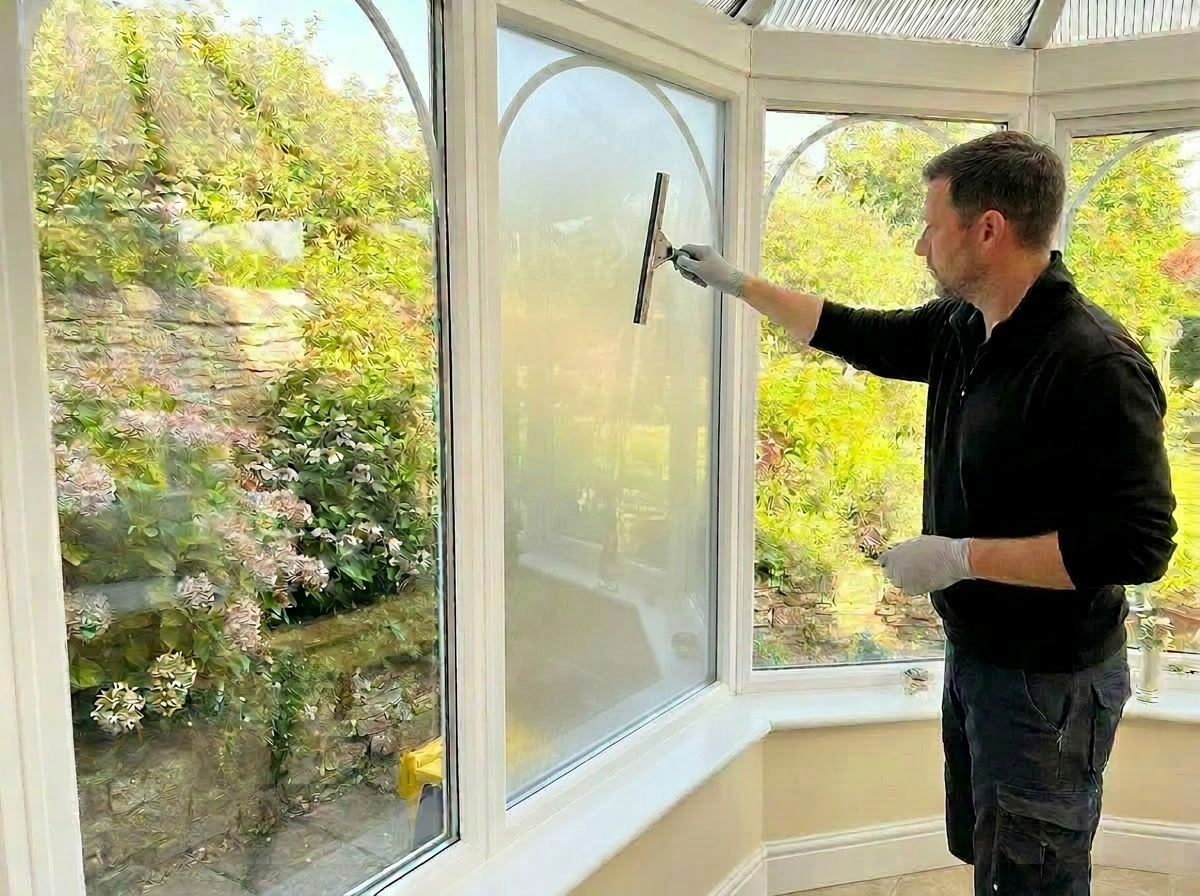
The most common mistakes with window film installation are inadequate surface preparation, incorrect film selection and applying film to glass that is not suitable for the chosen product.
Poor surface preparation: Dust, grease or residue trapped beneath the film causes bubbling and reduces adhesion. Meticulous cleaning is not optional; it is the foundation of a long-lasting result.
Wrong film for the glass type: Certain high-rejection films are not suitable for older single-pane glass or sealed units with existing coatings. Applying the wrong product can cause thermal stress and glass damage.
DIY application on large panes: Applying film to large glass surfaces without professional tools and experience almost always results in visible imperfections. The larger the pane, the more skill the installation requires.
Ignoring orientation: Choosing a film without considering which direction the window faces leads to either over-darkening or under-performance.
A specialist installer with over 20 years in the field will avoid all of these issues as a matter of course. For a broader look at how window film compares to other solutions, the blinds versus window film guide at TwilightTint is a useful reference.
Do Window Films Work in Humid Regions?
Window film performs well in humid climates, including coastal areas. The film itself is not affected by ambient humidity once it has fully cured after installation. In the UK context, coastal locations such as Selsey, Bognor Regis and Portsmouth experience a combination of bright sun and coastal humidity and solar control window film works effectively in these conditions.
The curing period after installation, during which the film fully bonds to the glass, may take slightly longer in very humid conditions. A professional installer will advise on this and ensure the installation is carried out correctly for the local environment.
Will Window Film Stop Furniture from Fading?
Window film significantly helps reduce UV-related fading of furniture, flooring and soft furnishings. UV radiation is the primary cause of colour fading in fabrics, wood and flooring materials and solar control window film helps block a substantial proportion of UV before it reaches interior surfaces.
This is one of the most practically valuable benefits for homeowners who have invested in quality interiors. Rugs, sofas, wooden floors and artwork are all vulnerable to prolonged UV exposure through unprotected glass. Window film does not eliminate fading entirely, since some visible light also contributes to colour change over time, but it makes a meaningful difference to the rate at which fading occurs.
Can Renters Use Removable Window Film?
Renters can use removable or static-cling window film, which does not require adhesive and can be removed without leaving residue. This type of film is suitable for privacy applications and mild glare reduction, though it generally offers less solar control performance than professionally installed adhesive film.
For renters who want more substantial heat or glare management, the most practical route is to discuss the option with the landlord. Many landlords are open to professionally installed window film since it protects the property's interior and adds value without structural change.
Permanent window film installation is typically arranged by the property owner. If you are a landlord or homeowner considering this for a rental property, a specialist can advise on the most appropriate film type for the circumstances.
Window Film Versus Solar Screens: Which Is Better?
Window film and solar screens address the same problem but in different ways. Solar screens are external mesh screens fitted over windows to intercept sunlight before it reaches the glass. Window film is applied directly to the glass surface on the interior.
Choose window film if:
You want a clean, permanent result with no visible external fittings
The property has a conservatory or large glazed area where external screens are impractical
UV protection for interior furnishings is a priority
You want a solution that works year-round without seasonal removal
Choose solar screens if:
External shading is already part of the building's design
You want a solution that can be removed entirely in winter
The windows are in an area where external fittings are practical and permitted
For most homes, conservatories and static caravans across West Sussex and Hampshire, professionally installed window film delivers a cleaner result with broader benefits. It is worth reading more about how window film transforms home comfort to understand why it is often the preferred choice.
How Much Does Professional Window Film Installation Cost?
Professional window film installation costs vary depending on the size of the glazed area, the film specification and the type of property. Conservatories, for example, involve more complex installation than a single room window.
Prices are not published here, as they depend on an accurate assessment of each property. The honest approach is to request a quote based on your specific situation rather than work from a general figure that may not apply to your home.
What is consistent is that professional installation from a specialist with over 20 years in the field delivers a result that lasts, performs as expected and avoids the problems that come with cheaper alternatives or DIY application. TwilightTint is rated 4.7 stars on Google and that rating reflects the quality of the work and the honesty of the advice given.
Conclusion
The connection between climate change and home comfort is becoming more tangible for homeowners across the south of England. Warmer summers, more intense periods of direct sun and the growing cost of energy all point toward the same practical question: how do you keep your home comfortable without significant disruption or ongoing expense?
Climate adaptation window film is a measured, proportionate answer to that question. It helps reduce solar heat entering through glass, helps reduce glare, protects furniture and flooring from UV fading and contributes to lower energy use over time. It works on older homes and newer properties, conservatories, static caravans and commercial premises. And it requires no structural work, no planning permission and no ongoing running costs.
Actionable next steps:
Identify the rooms or spaces in your home that become uncomfortable during brighter months
Note the orientation of the main glazed areas (south and west-facing windows are typically the priority)
Consider whether heat, glare, UV fading or privacy is your primary concern
Request a professional assessment from a trusted local specialist
TwilightTint has been serving homeowners across West Sussex and Hampshire for over 20 years, with a specialist focus on window film installation and a calm, honest approach to every project. Rated 4.7 stars on Google, the team brings the same meticulous preparation and genuine care to every installation, whether it is a single room, a conservatory or a full property.
Request your quote at twilighttint.co.uk.
Frequently Asked Questions
What is climate adaptation window film?
Climate adaptation window film is a solar control film applied to existing glass to reduce heat, glare and UV radiation entering a building. It is a low-disruption retrofit solution for homes, conservatories, static caravans and offices.
Does window film make a room noticeably cooler?
Rooms with professionally installed solar control window film typically feel more comfortable during brighter afternoons. The film reduces the rate at which solar heat builds up, so rooms warm more slowly and stay usable for longer.
Is window film permanent?
Professionally installed adhesive window film is designed for long-term use and is not intended to be removed seasonally. It can be removed by a professional if required. Removable static-cling film is also available for situations where a non-permanent solution is needed.
Will window film make my rooms too dark?
A well-chosen film reduces glare and solar heat without significantly darkening the room. The goal is softer, more comfortable natural light, not a dark interior. A specialist will recommend a film that balances performance with light transmission for your specific space.
Does window film work on double glazing?
Yes. Window film is compatible with most double-glazed units. A specialist will assess the glass type before recommending a film to ensure compatibility and avoid any risk of thermal stress.
How long does window film installation take?
Installation time depends on the size and complexity of the area. A single room may take a few hours. A full conservatory or larger property will take longer. A specialist can give a more accurate estimate after assessing the property.
Can window film be applied to a conservatory?
Yes. Conservatory window film is one of the most effective applications, transforming a space that is often unusable in summer into a comfortable room that can be enjoyed year-round.
Is window film suitable for a static caravan?
Yes. Solar control window film is particularly well-suited to static caravans, which tend to overheat quickly due to large windows and lightweight construction. It also helps reduce UV fading of interior furnishings.
Does window film require maintenance?
Professionally installed window film requires very little maintenance. Cleaning with a soft cloth and mild detergent is sufficient. Avoid abrasive cleaners or sharp implements near the film surface.
How do I get a quote for window film installation?
The most straightforward approach is to contact TwilightTint directly at twilighttint.co.uk to request a quote. The team will assess your property and recommend the most appropriate film for your needs.
References
UK Met Office. (2023). State of the UK Climate 2022. Retrieved from https://www.metoffice.gov.uk
Energy Saving Trust. (2022). Reducing heat gain in homes: practical measures. Retrieved from https://energysavingtrust.org.uk
International Window Film Association. (2021). Window film performance and energy efficiency overview. Retrieved from https://www.iwfa.com
Building Research Establishment (BRE). (2020). Solar heat gain and domestic comfort in UK housing. Retrieved from https://www.bre.co.uk
Climate Change Committee. (2023). Adapting to climate change: progress report to Parliament. Retrieved from https://www.theccc.org.uk
Table of content
- Quick Answer
- Key Takeaways
- What Exactly Is Climate Adaptation Window Film?
- How Much Cooler Does Window Film Make a House?
- Cost Comparison: Window Film Versus Air Conditioning
- Best Window Films for Hot Climates and Warm British Summers
- Can Window Film Help Reduce Energy Bills?
- Is Window Film Good for Old Homes or Just New Construction?
- Common Mistakes When Installing Window Film
- Do Window Films Work in Humid Regions?
- Will Window Film Stop Furniture from Fading?
- Can Renters Use Removable Window Film?
- Window Film Versus Solar Screens: Which Is Better?
- How Much Does Professional Window Film Installation Cost?
- Conclusion
- Frequently Asked Questions
- References


Join us on our journey as we transform your glazing and help you achieve its full potential.
Feel free to get in touch with us via our chat widget
@ TwilightTint Ltd 2026. All right reserved.
X


Youtube
